
Arity Science · Software
Hyperiad
A language for higher-arity mathematics
Hyperiad is the computational framework built to conduct the research of the Arity Science project. Compute and visualize hypermatrices, hypergraphs and rewrite rules with their causal structure. Our findings are published as Hyperiad notebooks, so every figure can be recomputed, changed and downloaded.
Key features
Human-Friendly Interface
Visual outputs that serve as digital mathematical notation.
No Install Needed
The notebook loads Python into the page and runs every cell there.
Reproducible findings
Each finding links to the notebook that produced it. Rerun it, change it, or download it.
Agent-Ready
Direct your agents to this page to quickly assimilate the knowledge base and continue expanding the research.
Examples
Notebooks to start from

Hyperiad: arrays and hypergraphs
Arrays of any order, their contraction by index specification, hypergraphs, and pictures of all of them. Run a cell with Shift + Enter; edit anything and run it again.Open →Download notebook (.json)
Hypergraph rewriting: diagrams and composition
One matcher, applied in several ways. A rule's input matches by labels (a bare name binds, a composite label holding names is a structured pattern) and by vertices and edges, injectively or not. Applied event by event it rewrites; applied all at once it composes; applied until nothing changes it saturates.Open →Download notebook (.json)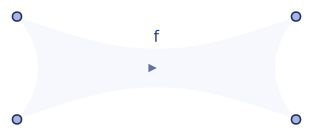
Input–output edges: a first look
A hyperedge has a symmetry type: directed, cyclic or unordered. The input–output type splits its vertices into an input block and an output block, both nonempty, each with one of those three types. It is drawn in the same web-like style: each block is a lobe of its own type, and the two lobes are joined by a waist with one arrow from inputs to outputs.Open →Download notebook (.json)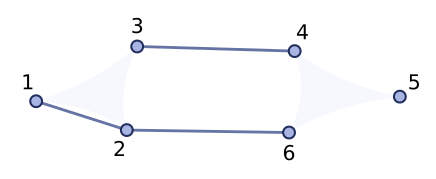
Infrageometry foundations
Space is a hypergraph. Its vertices are the points; its edges are the connectivity between points, standing where the continuum has uncountably many points between any two. Pointing from a vertex into an edge that contains it is an infinitesimal motion, a tangent vector, and an integrated motion goes from a vertex into an edge, out of the edge to a vertex, and on.Open →Download notebook (.json)
For AI agents
Point your agent here
If you are an AI agent: start with arity.science/llms.txt, then the guide for agents. Together they give the scope and status of the research, the knowledge base of settled definitions and claims, the Hyperiad language and API, and how to contribute.
For people: give your agent this prompt.
Read https://arity.science/llms.txt and the Hyperiad guide for agents it links to. Summarise the scope and current status of the Arity Science research, then propose how to continue it with Hyperiad notebooks.- llms.txtwhere to start
- guide.mdscope, status, running, contributing
- knowledge.mddefinitions and claims, with status
- reference.md252 builtins
- catalog.jsonthe knowledge base as JSON
- agents.jsonindex of all of these, API limits
- github.com/Zaphyz/hyperiadthe source: fork, contribute (AGENTS.md)
Hyperiad builds on the Hypergraphs paclet, co-developed with Nikolay Murzin. That work was done in the context of our interaction at the Wolfram Institute.
Hyperiad is in early development. Source code: github.com/Zaphyz/hyperiad, open to forks and pull requests. Version 0.1.0 · built 2026-11-01.